


Pelican Systems: All You Need To Know About Decorative Cornices
Let’s get technical with all the info you need to know about decorative cornices. The experts from Pelican Systems are sharing their knowledge today so you can figure out the best options for your space!


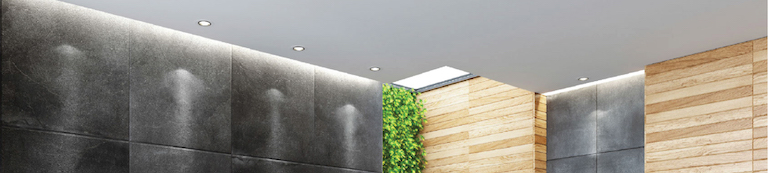
EPS vs XPS?
The short-term for expanded polystyrene is EPS, and for extruded polystyrene, it is XPS. The main difference between expanded and extruded polystyrene is that expanded polystyrene is manufactured from solid beads of polystyrene while extruded polystyrene uses solid polystyrene crystals.
This makes EPS more affordable, but while being more affordable at point of purchase, when painting EPS you would need a minimum of two coats of paint.
XPS is considered a premium product, which may cost more initially, but when painting XPS you would need a maximum two coats of paint which would reduce the amount of paint needed and labour for additional coats of paint.
Cornice Maker has both XPS (Premium), XPS (Budget) and EPS on offer, so whatever your budget you can find a cornice to suit.
Certain designs are repeated across the ranges. This means you can also mix and match between the ranges to suit your budget.
Adhesive and Coverage Guidelines
Cornice Installation is easily done with a Cornice Adhesive. Furthermore, the coverage depends on the type and size of the Cornice, as well as the smoothness of the surface.
A rough guideline you can use for estimating quantities is as follows:
For 18mm wide glue surface – approximately 50 grams per metre.
For 25mm wide glue surface – approximately 62 grams per metre.
Large, heavy cornices with wider glue surface area – up to 100 grams per metre.
Rough plastered walls or bricks may require more adhesive as would uneven wall surface areas.
Cornice Adhesive is available in a tube of 280 millilitres, and tubs of 2kg, 5kg and 7.5kg.
LED Ready Profiles and Bulkheads – add Sophistication and Class
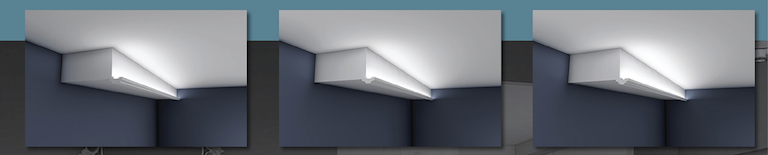
Adding LED lights to a Cornice is a wonderful way to add sophistication and ambience to your living areas.
Cornice Maker has a range of LED-ready profiles to choose from. Furthermore, the LED strips are purchased separately by the metre. These are subsequently taped to the cornice profile making installation easy.
Additionally, 12 Volt or 220 Volt variants can be used for the LED strips. However, 220 Volts are recommended as being preferable in terms of the light cast.
Top Tip:
It is also recommended that the designated area for the Led strip is painted grey prior to installation which ensures that the light will not shine through the cornice.
EPS is also used for bulkheads as it weighs less than XPS. A good polyurethane adhesive is to be used when installing a bulkhead, as it provides stronger adhesion than your regular cornice adhesive.
As for paint? Use water-based paint only i.e., acrylic paint, as solvents will damage the product.
Hopefully, this demystifies some of the choices you are faced with and you can choose your favourite design with more confidence.


Contact: Pelican





You might also like...
-
Finding the Perfect Flame: Choosing a Morsø Woodburning Stove

Few things transform the atmosphere of a home quite like the warmth of a woodburning stove. For Morsø, that warmth is combined with elegant Danish ...
-
Architectural Ironmongery Explained: The Invisible Architecture of Modern Living

In the language of architecture, Ironmongery Warehouse Africa is often the grand gestures—the sweeping façades and sculptural staircases—that command attention. Yet, behind every seamless space ...
-
Lighting as Architecture: How Integrated Systems Are Transforming Modern Interiors

Light, when fully integrated, becomes less an addition and more a defining layer of space, shaping how interiors are experienced, navigated, and understood. Within ...
-
Decor Handles: Why Door Stops Are Essential for Every Home

Every home has them, yet they’re rarely given a second thought. Every home has them, yet they’re rarely given a second thought. Decor Handles believes ...


Visit SA Decor & Design on social media


