


Pulse in Motion: Maison&Objet looks to South Africa for a new generation of design


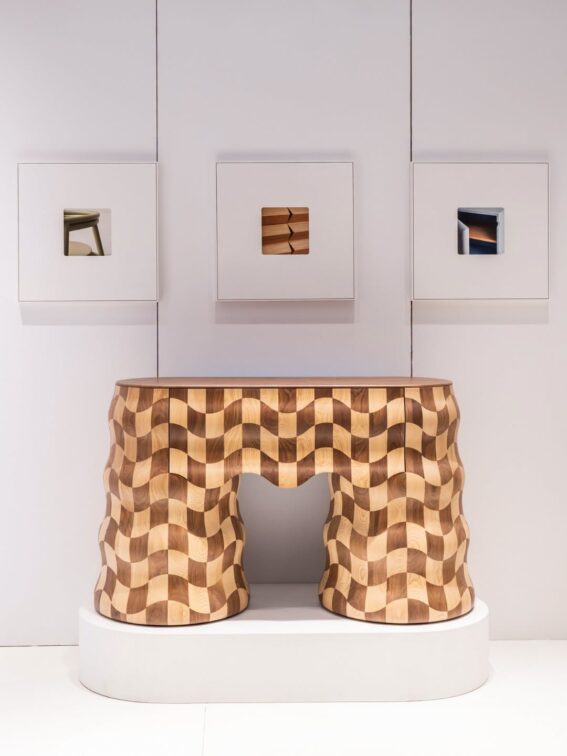
Maison&Objet’s September 2026 edition explores design as a catalyst for collective movement, while its Rising Talent Awards turn the spotlight on seven emerging South African creatives working across furniture, ceramics, lighting and material experimentation.
Taking place in Paris from 10 to 14 September 2026, Maison&Objet Pulse returns under the theme Pulse in Motion, an exploration of design’s capacity to generate momentum at a moment marked by fragmentation and uncertainty.
Rather than positioning design simply as a response to change, the September edition considers how it might initiate it.
Across seven immersive sectors, Pulse in Motion examines the impulses that prompt people to make, collaborate and move forward. The theme proposes design as connective tissue: something capable of bringing together communities, stories, materials and ideas while turning creative energy into tangible action.
At its centre is a deceptively simple proposition – that innovation rarely happens alone.
The fair presents creativity as a collective and embodied process, shaped as much by exchange and cultural memory as by individual authorship. Furniture, objects and experimental materials become vehicles for connection, while craftsmanship is considered not as a counterpoint to innovation but as one of its driving forces.


South African design takes the stage
That thinking finds a particularly vivid expression in the 2026 Rising Talent Awards, which this year focus on South Africa.
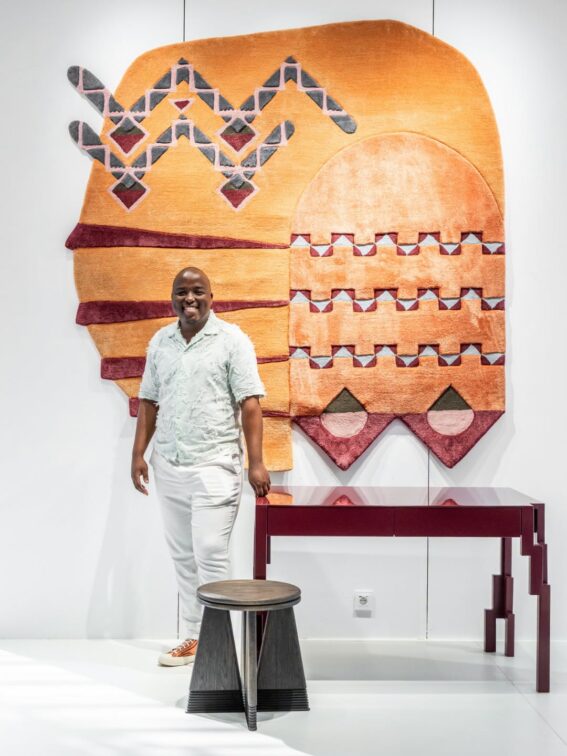
Seven emerging South African designers and studios have been selected for the programme, bringing practices that move between collectible design, furniture, sculpture, lighting and material research.
Together, their work offers a multifaceted picture of contemporary South African design – one that resists a singular aesthetic in favour of individual approaches informed by heritage, identity, hand-making, experimentation and place.
Among the laureates is Meetlo Studios, whose work draws connections between African traditions and contemporary craft to produce objects with a strong material and cultural presence.


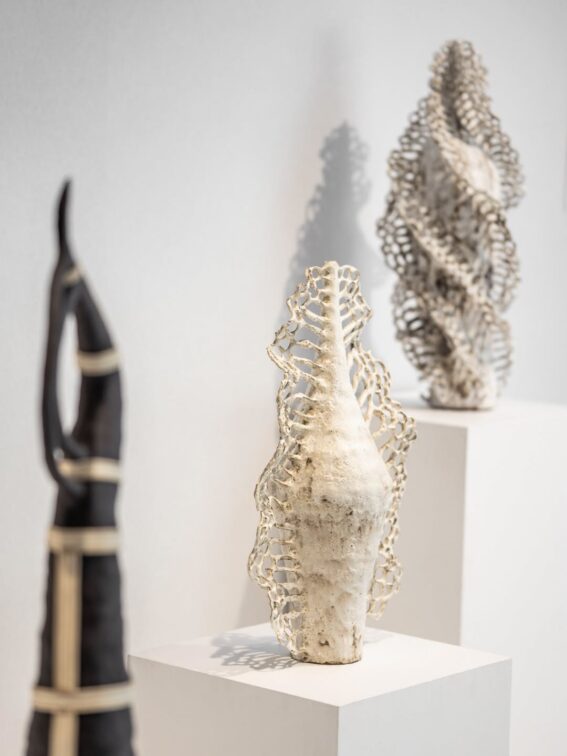
Multidisciplinary designer Simphiwe Mbunyuza approaches making through storytelling and questions of identity, while Studio Lloyd transforms crochet – a technique usually associated with intimate, domestic scales – into sculptural lighting installations with an architectural presence.
DEFT Studios, meanwhile, occupies the shifting territory between functional object and artistic experiment, investigating how utility can coexist with more expressive forms of contemporary making.
The selection also includes Nish Design, whose refined furniture celebrates evidence of the human hand and the beauty of imperfection, and Pinda Design, which combines tactile materials, craft processes and contemporary forms.
Ceramicist Karlien van Rooyen, selected in the craft category in association with Ateliers d’Art de France, completes the group. Her expressive sculptural ceramics draw on ideas of environment and transformation.
Beyond a single idea of African design.
What connects the seven designers is not a prescribed visual language but an attitude towards making.


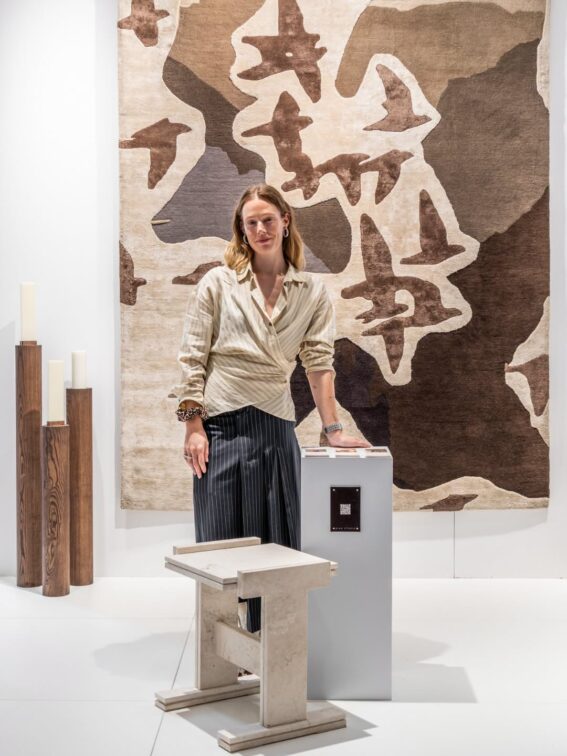
Their practices suggest a generation increasingly comfortable moving between disciplines and between inherited knowledge and contemporary production. Traditional processes can be enlarged, disrupted or placed in unfamiliar contexts; imperfections can become defining details; cultural narratives can provide starting points without determining an object’s final form.
It is an approach that complicates the tendency to discuss African design as a homogeneous category.
Instead, the 2026 laureates reveal multiple South African design identities unfolding simultaneously – from highly tactile handcraft to experimental collectible objects and contemporary furniture.
The designers were selected by an international jury of design professionals including Alan Hayward, Garreth David, Anna Weylandt, Donald Nxumalo, Jomo Tariku Kavishe, Tash Mjo, Stéphane Galerneau and Gareth Pearson.
Their selection comes at a moment of growing international attention around design practices emerging from the African continent, particularly those challenging conventional distinctions between art, craft and industrial design.
Craft as an engine for experimentation
Materiality runs throughout the selected practices.
Crochet, ceramics, timber and other tactile processes are treated not merely as techniques but as languages through which designers can communicate memory, identity and contemporary experience.


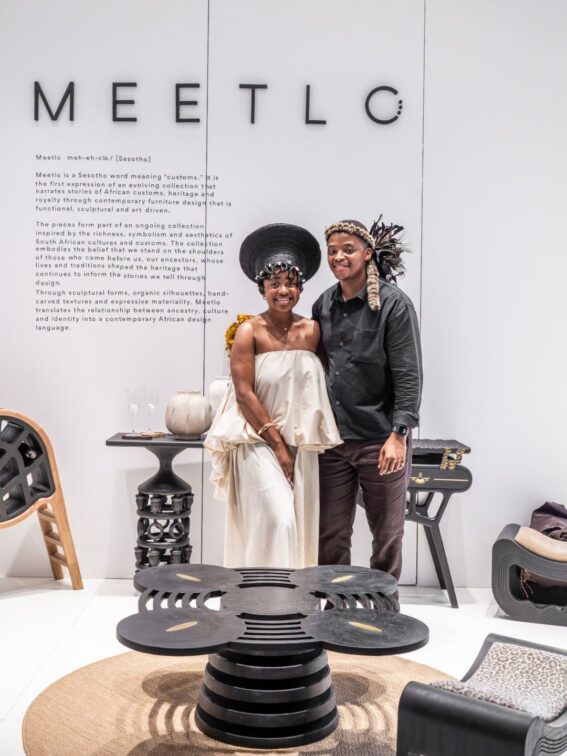
This emphasis also gives Pulse in Motion’s central idea a physical dimension.
Movement here does not necessarily mean speed. It can be found in the transformation of a material, the repetition of a hand-made gesture, the transmission of knowledge between generations or the translation of a familiar technique into an unexpected object.
The result is a conception of innovation grounded less in novelty for its own sake and more in the ability to make connections.
For Maison&Objet, this provides an alternative reading of what progress in design might look like. Technology and new production methods remain part of that conversation, but so too do the slower processes of craft, collaboration and cultural exchange.
Design as collective momentum
Pulse in Motion ultimately frames design as an active rather than passive discipline.
Its premise is that objects and spaces do more than reflect the conditions in which they are produced. They can influence behaviour, establish relationships and give physical form to ideas about how people might live together.
Against a backdrop in which established cultural and social reference points can feel increasingly unstable, Maison&Objet’s theme places emphasis on what might still be constructed collectively.
The South African Rising Talent Awards provide an apt lens through which to consider that proposition.


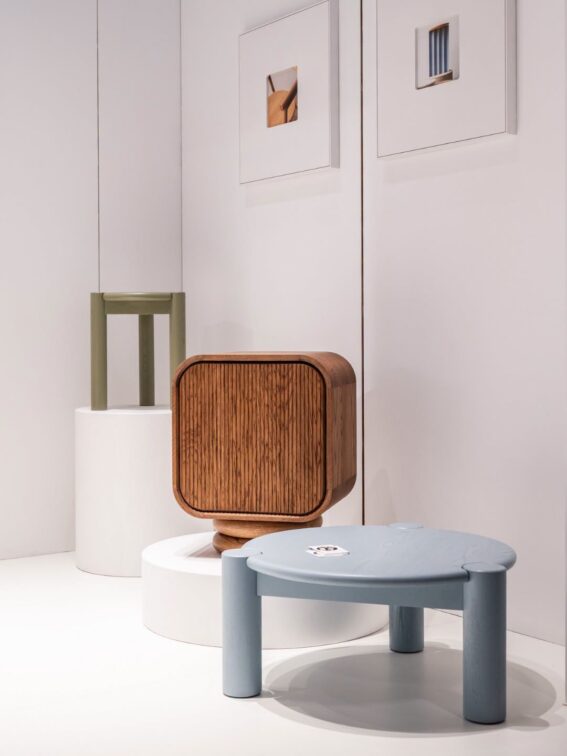
Each of the seven laureates works from a distinct position, but collectively they demonstrate how contemporary design can emerge from the intersection of personal narrative, cultural knowledge and material experimentation.
Rather than presenting heritage as something fixed, their work treats it as material capable of movement – something that can be questioned, transformed and carried into new contexts.
That sense of continuity without stasis is perhaps where Pulse in Motion becomes most persuasive.
The pulse is not simply the rhythm of an international design fair or the relentless arrival of new objects. It is the quieter circulation of ideas between makers, materials, histories and audiences.
And in Paris this September, Maison&Objet is betting that the most consequential movement in design may begin there.
Maison&Objet Pulse takes place from 10 to 14 September 2026. The seven South African Rising Talent Awards laureates are presented in the Design District in Hall 5A, in partnership with Decorex Africa.
For more, visit Maison&Objet.





You might also like...
-
South African Design Trends 2026 | Selective Fans

Warm timber, earthy colour and layers of natural texture are defining the new season as South African interiors embrace a softer, more grounded approach to ...
-
Nature-Inspired Restful Living with Luxury Tiles | Classic Luxury

In an age defined by constant motion, the home is increasingly envisioned as a place of quiet retreat—an environment that restores rather than overwhelms. Classic ...
-
Studio WYZE Leads Design for FENIX Mayfair London | Modern Greek Restaurant Interiors

The modern Greek restaurant’s London debut unfolds as a journey through light, rhythm and space Studio WYZE, the interior design firm with offices in London ...
-
Neolith at Salone del Mobile 2026: Immersive Stone Installation in Milan

This year, Neolith brought stone into a new dimension in Milan, presenting an immersive installation that moved beyond display into experience. Unveiled at Salone del ...


Visit SA Decor & Design on social media


