


Brick Reimagined: The Art of Perforation in South African Architecture


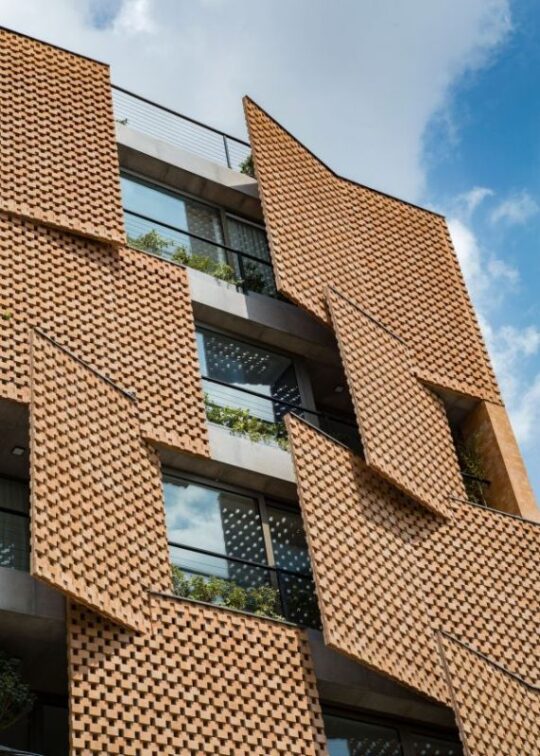
Walls have long served as the protectors of privacy—defining space, shielding interiors, and safeguarding those within. Yet today’s architects are reinterpreting this ancient architectural element, transforming the wall from a barrier into a breathable boundary. Across South Africa, perforated and lattice brickwork is quietly revolutionizing the relationship between private and public realms—creating façades that protect while still inviting in light, air, and a touch of openness.
Rooted in the Earth
Few materials embody South African architectural identity as authentically as ceramic clay brick. Locally produced and culturally significant, clay brick remains a sustainable choice grounded in both tradition and practicality. Its natural, earthy tones—unfading even under the fierce African sun—bring warmth to the cool geometries of contemporary steel-and-glass homes.
Beyond aesthetics, brick is a natural insulator, balancing temperature and humidity to suit the country’s mild climate. This passive performance makes it a timeless favorite among designers who value both efficiency and endurance.


Sustainability and Accessibility
Clay brick’s appeal extends beyond design—it’s an economic catalyst. Sourced locally and built by hand, brick construction remains affordable and accessible even in remote areas. It provides employment, empowers communities, and sustains local craftsmanship. In an age of prefabrication and imported materials, brick retains its democratic spirit: simple, strong, and profoundly human.
Innovation Through Tradition
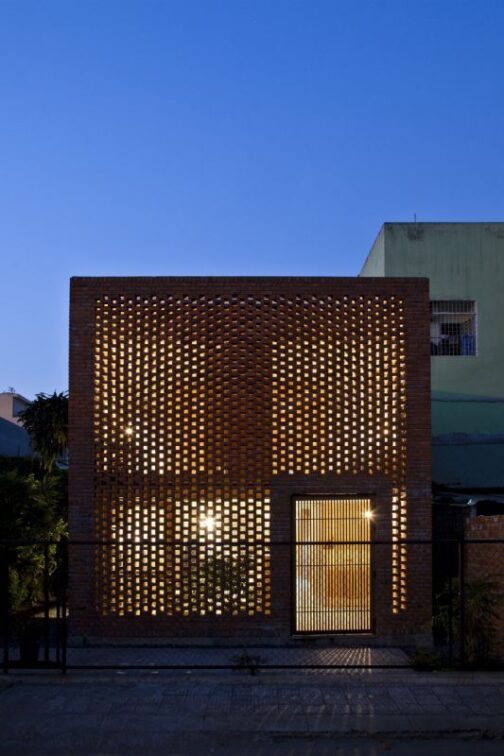
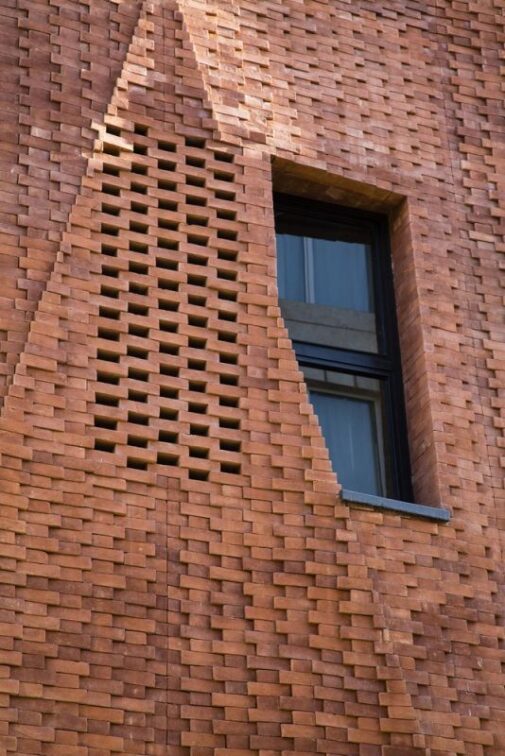
While brick is one of the oldest building materials known, today’s architects are proving it still has untapped potential. By perforating, stacking, and reinterpreting brick walls, they challenge conventions of solidity and form. These porous surfaces achieve a delicate balance—rigid yet fluid, protective yet permeable.
The result is a dialogue between light and shadow, between openness and seclusion. The latticed façades act as screens that breathe, filtering sunlight, framing views, and fostering natural ventilation. They make architecture not just functional, but sensory—responsive to environment and experience alike.
The Beauty of Purpose
In this collection, we showcase projects that celebrate brick in its most elemental and expressive form. Each structure demonstrates that innovation need not come from complex technology, but from rethinking the familiar.
These perforated walls are more than aesthetic statements—they are sustainable solutions for contemporary living. They harness the full potential of a humble material to create spaces that are private yet porous, modern yet timeless.
Brickwork for a Better Future
As we reconsider how architecture can bridge comfort, culture, and climate, perforated brickwork offers a compelling blueprint. It is proof that clay brick—affordable, enduring, and rooted in the land—remains as relevant today as ever.
In the hands of thoughtful architects and builders, the wall ceases to divide. It becomes a mediator—between light and shadow, tradition and innovation, nature and habitation.
And in that delicate balance, South African architecture finds both its heritage and its horizon.


For more visit Claybrick.





You might also like...
-
Creating a Modern Outdoor Room with Texture & Personality | Plaisir du Jardin

Outdoor living spaces are a South African tradition. They’re where people relax, gather with family and friends, and make memories under the glorious sunshine. Today’s ...
-
Outdoor Braai Design South Africa: Caesarstone Redefines Outdoor Living

Fire, it seems, has found a new language—one spoken fluently in stone, texture, and restraint. In the evolving landscape of South African design, the humble ...
-
AM Fenestration: Aluminium Cladding for Modern Architecture

Contemporary architecture continues to embrace materials that combine striking aesthetics with long-term functionality, and aluminium cladding has emerged as one of the most desirable finishes ...
-
Eclipse SA Sets the Benchmark for Strength and Reliability in Architectural Louvre Roof Structures

As South Africa continues to recover from the exceptionally severe weather conditions that recently swept across the country — bringing gale force winds, torrential rain, ...


Visit SA Decor & Design on social media


