


Yakisugi and ThermoWood: Two Natural Timber Treatments Redefining Contemporary Exterior Design


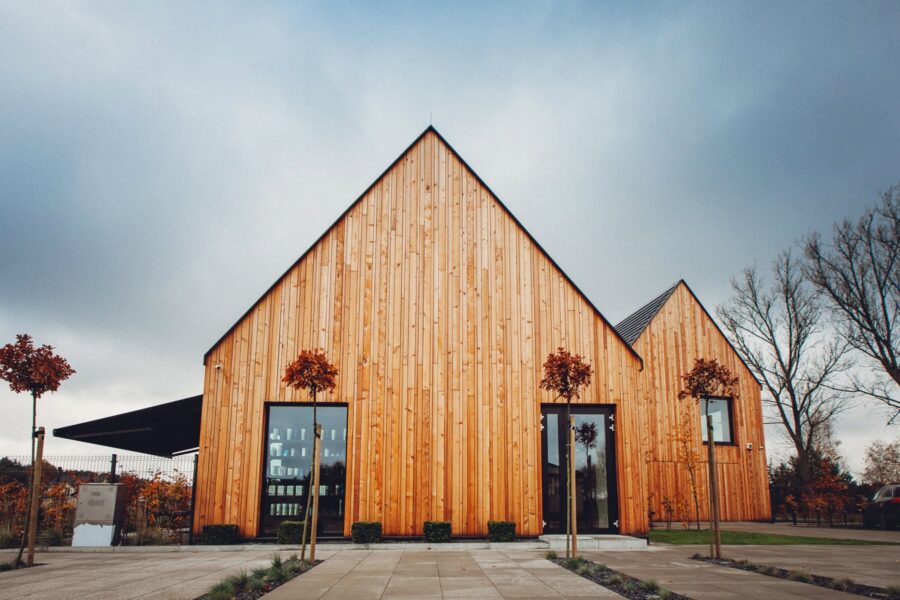
The most compelling exterior cladding materials available in the contemporary market share a characteristic that sets them apart from manufactured alternatives: they are produced through processes that work with the natural properties of timber rather than coating or impregnating it with synthetic materials. The result, in both cases, is a material that performs better over time than its untreated equivalent, ages with intentional visual character, and carries sustainability credentials that are genuine rather than claimed.
Yakisugi — the Japanese art of controlled timber charring, more widely known in Western markets as Shou Sugi Ban — and thermally modified ThermoWood represent the two most significant developments in natural timber treatment for exterior cladding over the past two decades. Understanding how each works, where each excels, and how their performance characteristics differ is essential for anyone specifying premium exterior cladding for contemporary residential or commercial projects.
Yakisugi: The Ancient Technique With Modern Relevance
The practice of charring timber surfaces to preserve and protect them predates recorded Japanese architectural history. Cedar and other softwoods were subjected to controlled burning as a standard construction practice across feudal Japan, producing a carbonised surface layer that resisted fire, moisture, insects, and biological decay without any chemical input. The technique fell out of widespread use as synthetic preservatives became available, and was rediscovered by the global design community in the early twenty-first century as architects and specifiers sought materials with both authenticity and genuine performance.
The chemistry of why yakisugi works is straightforward. When timber is subjected to controlled flame, the surface cells undergo rapid pyrolysis — thermal decomposition in the absence of sufficient oxygen for complete combustion. The result is a carbon layer that is hydrophobic, biologically inert, and UV-stable. It repels moisture rather than absorbing it. It provides no nutrition for fungi, bacteria, or insects. It resists the photodegradation that causes untreated timber to grey unevenly and develop surface checking.
The visual qualities that have made yakisugi one of the most sought-after exterior finishes in contemporary global architecture are inseparable from this chemistry. The deep black surface, the characteristic cracked texture of a deep char, the way the material catches and holds light differently at different times of day — all of these are direct expressions of the carbonisation process, not aesthetic choices applied on top of the material. This is what gives yakisugi a depth and authenticity that painted black surfaces cannot replicate.
In the UK market, yakisugi charred timber is specified across a wide range of building types and project scales — from bold architectural statements on residential extensions and garden studios to careful, contextual applications on agricultural conversions and cultural buildings. The material has demonstrated service lives of 25 to 40 years in UK exposure conditions, with maintenance requirements limited to inspection and occasional cleaning.
For a complete technical and specification guide to yakisugi charred timber cladding in the UK context — covering the charring process, the range of finish levels available from light surface char to deep charred profiles, species selection between Siberian larch and Nordic spruce, installation requirements, and long-term performance data — the yakisugi charred timber cladding UK guide provides the most comprehensive resource available for designers and specifiers working on current projects.
ThermoWood: Performance Through Precision Heat Treatment
Where yakisugi achieves its protective qualities through controlled combustion, ThermoWood achieves comparable durability through precise heat treatment in a controlled industrial environment. The process heats Nordic pine or spruce to between 185 and 215 degrees Celsius in a closed kiln using steam, with no oxygen present and no chemical agents of any kind. The transformation that results is permanent and measurable.
The primary change is the degradation of hemicellulose — the component of wood’s cell wall most responsible for moisture absorption. When hemicellulose is broken down through thermal modification, the timber’s equilibrium moisture content drops significantly. In UK conditions, where humidity drives moisture movement in exterior timber through a wide seasonal range, this reduced moisture absorption translates directly into reduced dimensional movement — less swelling, shrinking, cupping, and joint variation across the annual cycle.
The durability improvement is equally significant. ThermoWood achieves Durability Class 2 under BS EN 350 — equivalent to oak, teak, and iroko — without any chemical treatment. For exterior cladding applications, this means a material with genuine resistance to biological decay that does not rely on the maintenance of a chemical treatment system to sustain its performance. The protection is inherent, not applied.
ThermoWood’s dimensional stability makes it particularly well suited to profiles where precision matters. Shadow gap and rainscreen profiles, where the visual quality of the installation depends on consistent joint widths maintained across seasons, perform significantly better in ThermoWood than in untreated softwoods that respond to moisture variation with visible movement. Triple shadow gap profiles — which create three parallel horizontal shadow lines across each board — are among the most widely specified contemporary cladding profiles in the UK, and ThermoWood is the material that makes their long-term visual consistency achievable.
For a complete technical guide to ThermoWood cladding performance across UK exposure conditions — covering moisture behaviour, dimensional movement data, durability class testing, fire performance characteristics, compatibility with various fixing systems, maintenance intervals, and BRE-accredited service life data — the ThermoWood cladding durability and lifespan UK guide provides the full technical picture for architects, specifiers, and contractors working on projects where long-term facade performance is part of the brief.
Choosing Between the Two
Yakisugi and ThermoWood are not competitors — they serve different design intentions and different project briefs. Yakisugi’s deep black surface makes a bold, unambiguous architectural statement that is either exactly right for a project or entirely wrong for it. ThermoWood’s warm honey-brown palette, weathering to silver-grey, is more versatile — it can anchor a contemporary minimalist elevation or complement a more traditional material palette without either dominating or disappearing.
The most considered contemporary UK exteriors use both — charred timber on the primary elevation as the architectural anchor, ThermoWood on secondary elevations, garden rooms, and outbuildings where a warmer material character is preferred. Both are natural, chemical-free, and sourced from sustainably certified Nordic forests. Together, they represent the current state of the art in natural exterior timber specification.







You might also like...
-
Eva-Last: What ROI Really Means in Home Renovations (And How to Calculate It)

Home renovations often begin with a feeling. A deck that no longer reflects the way you entertain. A home that functions perfectly well but feels ...
-
Naturally Slate: A Century of Confidence Above Every Home

From Highveld summers to coastal storms, South African homes and buildings demand materials that are built to last. In a world where roofing choices are ...
-
Spring is here: refresh your space with Easy Ivy

As the warmer months arrive in South Africa, outdoor living becomes a bigger part of how people enjoy their homes, businesses and entertainment spaces. Easy ...
-
Meet the Judges Behind the Africotta Installation of the Year Award

The Africotta Installation of the Year Award celebrates more than beautifully executed spaces. It recognises installations that challenge convention, demonstrate exceptional craftsmanship, and tell compelling stories through ...


Visit SA Decor & Design on social media


