


Natural Stone or Porcelain? SA Stone Studio Explores the Best Choice


Marble, granite and other natural stones have long been favourites in architecture and interior design, prized for their distinctive patterns, rich textures and timeless appeal. But advances in manufacturing have introduced an increasingly popular alternative: large-format Italian porcelain slabs that recreate the beauty of natural stone while offering impressive practical advantages. Level porcelain slabs offer a contemporary alternative, combining sophisticated aesthetics with practical benefits for modern interiors.
For homeowners, architects and interior designers, choosing between these materials involves more than appearance. Durability, maintenance, hygiene and how a surface will be used all play an important role. SA Stone Studio takes a closer look at the differences and what to consider when selecting finishes for contemporary interiors.
One of natural stone’s greatest attractions is its individuality. Every slab of marble or granite has its own veining, colour variations and geological characteristics, making it particularly appealing for statement countertops, feature walls and other architectural details.
However, this natural variation can present challenges when a project requires a consistent finish across multiple surfaces or rooms.


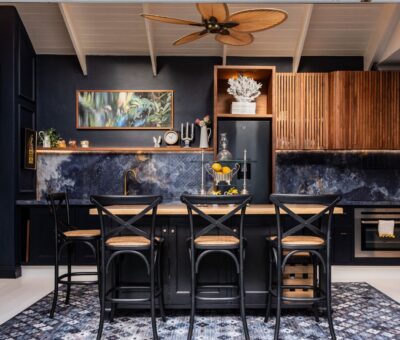
Italian porcelain offers greater control over the finished appearance. Advanced manufacturing techniques allow slabs to reproduce the intricate veining of Calacatta marble, the warm tones of travertine and other sought-after stone finishes with remarkable consistency.
Large-format porcelain also lends itself to bookmatching, where adjoining slabs create a mirrored pattern. This can produce a striking visual effect on expansive walls, kitchen islands and other prominent surfaces.
Beyond aesthetics, everyday performance matters, particularly in busy kitchens and bathrooms.
Natural stone varies considerably in its properties. Marble, for example, is relatively susceptible to staining and etching from acidic substances, while granite generally resists scratches and everyday wear better.
Many natural stones also require periodic sealing to help protect against moisture and staining.
Porcelain, by comparison, has a dense, non-porous surface that resists liquid absorption. Everyday spills such as coffee, wine and cooking oil can generally be wiped away without leaving a stain, making it a practical choice for frequently used areas.
High-quality porcelain slabs are also resistant to scratches, abrasion and heat, although appropriate care is still recommended to preserve their appearance over time.
Maintenance is another area where porcelain offers advantages. Unlike many natural stones, it does not require regular sealing, and its non-porous surface makes routine cleaning relatively straightforward.
This is particularly relevant in kitchens, where hygiene and food safety are important considerations.


SA Stone Studio highlights the Level porcelain slab collection, which carries NSF/ANSI 51 certification for food equipment materials. This provides independent assurance of the material’s suitability for food-contact applications, an important consideration for residential kitchens and commercial hospitality environments.
Natural stone will always have its appeal, particularly for those who appreciate the individuality of a material shaped over millions of years. Porcelain offers a different proposition: greater consistency, fewer maintenance demands and the freedom to achieve ambitious designs across large surfaces. Ultimately, the choice comes down to how a space will be used, the material’s character and the balance between appearance and practicality.








You might also like...
-
A Vision Brought to Life: Inside Lisa Adams’ Remarkable Kitchen Transformation

Ever pictured walking into a kitchen that feels as though it was lifted straight from the glossy pages of a design magazine—where elegance, practicality, and ...
-
blu_line Kitchen Architecture in a Khyber Rock Heritage Home

In Khyber Rock, architecture is never simply a backdrop. It is part of the landscape itself. blu_line kitchen architecture finds its place within this unique ...
-
Why a luxury kitchen is worth it | Casarredo

A kitchen is one of the biggest investments people make in a home. The catch is that most of that budget goes toward how it ...
-
Kitchen Splashback Ideas That Add Colour Without Retiling

Tiles are stubborn. Once they’re grouted onto a wall, they tend to stay there for decades, which is great for durability and terrible if you’ve ...


Visit SA Decor & Design on social media


