


Franke: Sinks from Fragranite – How does it work?
Fragranite is one of the hardest materials in the world. What does it consist of? And how is a Fragranite sink made out of these raw materials?


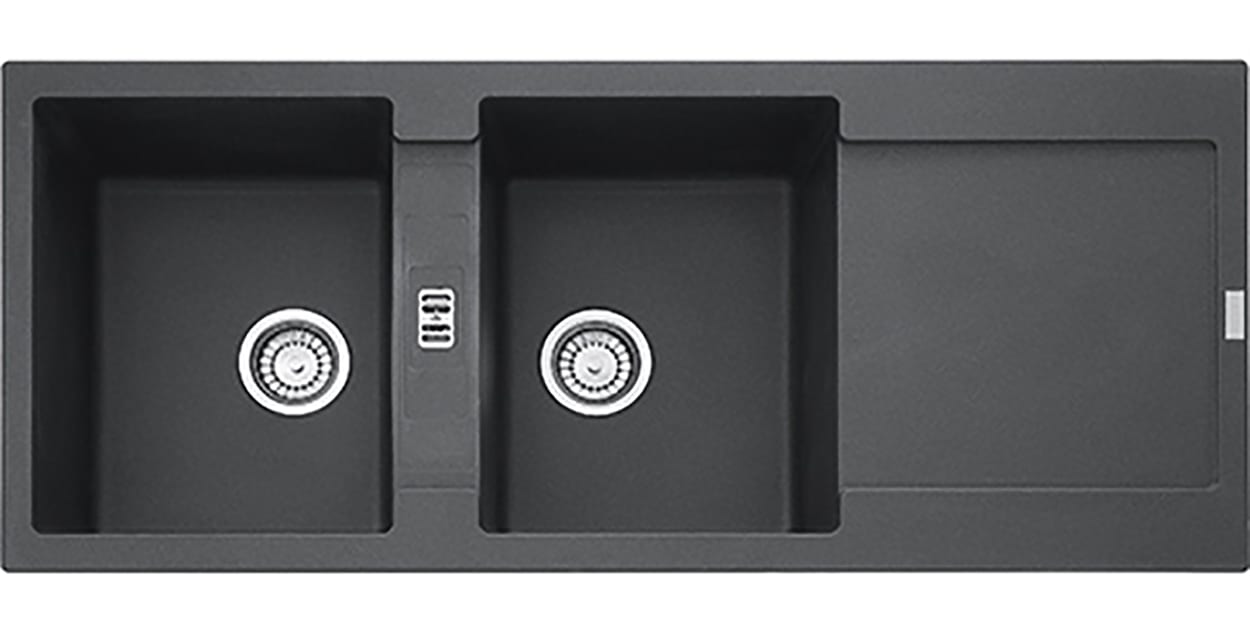 The Fragranite composite developed by Franke is one of the hardest materials in the world – based on granite and its natural properties. Contrary to the intrusive rock, however, Fragranite is not porous and does not let humidity penetrate it, making it extremely hygienic. The basic ingredients include 80 percent quartz sand and 20 percent hard acrylic resin. Tibor Beňo, Maintenance & Engineering Manager Franke Slovakia, explains how a finished Fragranite sink is made from these components:


 1) Preparing the raw materials
Quartz sands are delivered in various colours. In preparation, they are well mixed and checked for their quality. Meanwhile in the syrup plant, the syrup (the resin in its raw form) is made using various individual raw materials such as methyl methacrylate and polymethyl methacrylate according to a recipe. This syrup is also subject to rigorous quality control testing.
2) Mixing
The automated dosing system fills the exact amount of sand into buckets which are transported to the relevant production cell by an automated guided vehicle. There the sand is filled into a mixing pot and the syrup volume required is automatically dosed according the recipe and the mixing cycle starts. After the mixing cycle, the material is filled into a Franke sink mould.


 3) Filling and shaping
Each mould consists of two halves that are placed on top of one another. The cavities are then filled with the prepared mix. During heating, a chemical process begins that combines the materials in the mix into a solid form. After 17 minutes, the hardened sink is taken out of the mould.


 4) Further processing
Once the sink has cooled down completely, it is placed on the scale where the weight is checked and if correct confirmed into the system and itemised. Then two robots process the edges, discharge holes and pre-drill openings for the tap and accessories such as detergent dispenser. The finished sink is then cleaned and the Franke logo is applied.
The edges are processed robotically and holes and pre-drill openings discharged (for taps and accessories).
5) Packaging
Finally, the brackets for installation on the sink are applied and a Styrofoam protection applied for safe transport. The Fragranite sinks are palletised and taken to the warehouse, where the entire pallet is then wrapped in film.
Do you have a Fragranite sink in your kitchen? Check out Franke’s coloured sink range here.
Contact: Franke.


You might also like...
-
nuuma x Bang & Olufsen: Refined Living in Kramerville

nuuma Brings Bespoke Kitchen Design to Bang & Olufsen’s Kramerville Experience Centre Some showrooms display products. Others create experiences. The Bang & Olufsen Home Experience ...
-
Why Light Is Becoming Luxury’s Most Important Material

Luxury design has entered a new era. While grandeur was once defined by expansive homes, elaborate finishes and statement materials, today’s most desirable interiors are ...
-
Handcrafted Whitebirk Fireclay Sinks Bring Timeless British Craftsmanship to Contemporary Kitchens

The kitchen has evolved into one of the most considered spaces in the home, where craftsmanship and everyday functionality are expected to exist in ...
-
5 Spring Kitchen Trends to Inspire Your Home in 2026

Spring has a way of making us look at home with fresh eyes, and the kitchen is no exception. For 2026, the shift isn’t about ...




Visit SA Decor & Design on social media


