

Clay Brick: The Enduring Benchmark for Sustainable South African Construction


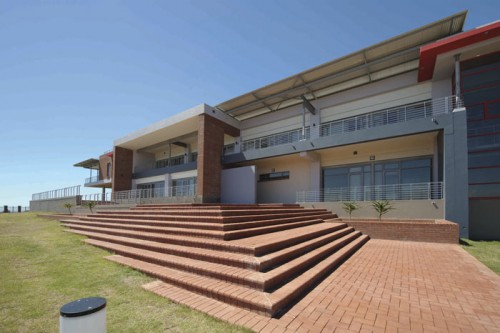
In a building landscape increasingly shaped by trends and technology, clay brick continues to stand apart — not just as a traditional choice, but as a high-performance, low-maintenance, and truly sustainable building material. For property developers and homeowners alike, its proven long-term investment value and environmental performance remain unparalleled.
Recent comparative research, both locally and internationally, continues to reaffirm why clay brick is considered the benchmark for thermally efficient and sustainable residential construction, particularly suited to South Africa’s diverse climatic conditions.
Thermal Performance Proven Across Continents
Exhaustive studies in Australia — conducted under real-world conditions and encompassing different walling systems — demonstrated that high thermal mass clay brick walls deliver superior thermal comfort in climates closely resembling South Africa’s. Similar findings were reached by the CTL Group in the United States, confirming clay brick’s ability to moderate internal temperatures and reduce energy consumption.
Brick Cladding Cuts Energy Use
A comparative study by the CTL Group examined standard US homes with various exterior cladding materials across ten different cities. The results were striking: houses with brick cladding consistently used less heating energy than lightweight alternatives, particularly in the warm, dry climates of the southwest. Moreover, brick-clad buildings required less cooling energy across all tested regions, highlighting the material’s thermal efficiency and adaptability.
Life Cycle Leadership
Compounding clay brick’s green credentials, the National Brick Research Centre at Clemson University conducted a cradle-to-grave life cycle assessment of various walling materials. Measured over each product’s warranted lifespan, the study evaluated energy consumption, pollution, waste, and depletion.
The findings were conclusive: clay brick outperformed fibre cement and EIFS (Exterior Insulation Finishing Systems) across most environmental categories. With a 100-year warranty period — double that of competing systems — clay brick offers long-term durability, low embodied energy per year, and the advantage of full recyclability.
Reinforcing the Australian Findings
The synergy between these results and those from Energetics Australia is unmistakable. Their full life cycle assessment compared a range of wall construction types across two house designs, three climatic zones, and four orientations. Regardless of wall type, embodied energy accounted for less than 10% of total energy consumption over a 50-year lifespan.
Importantly, the study found that clay brick cavity wall construction consumed less total energy (embodied plus operational) and produced lower greenhouse gas emissions than insulated lightweight alternatives in nearly all cases. When insulation was added within the cavity, clay brick construction outperformed lightweight weatherboard systems across every measured condition.
The Thermal Mass Advantage
Lightweight and modular walling systems — such as light steel frame and other “Alternative Building Technologies” — often fail to deliver comparable comfort or efficiency. Without the thermal mass of clay brick, these systems cannot absorb and store heat, resulting in rapid internal temperature fluctuations.
In practice, this means that during hot days, lightweight buildings often become “hot boxes,” as the peak external heat coincides with internal temperature spikes. Maintaining comfort then requires significantly more cooling energy — an ongoing operational cost that offsets any perceived upfront savings.
Built to Last, Built to Save
Beyond thermal performance, clay brick’s durability and low maintenance requirements translate into tangible long-term financial benefits. Unlike lightweight materials that demand regular upkeep and replacement, clay brick structures stand the test of time — with their embodied energy offset over decades of service.
As a mineral-based material, clay brick contributes to healthier indoor environments, free from volatile organic compounds, while offering acoustic insulation, colourfast aesthetics, and exceptional resilience. Even at the end of a building’s life, clay bricks can be reused or recycled — reinforcing their position as a truly circular building material.
The Smart Choice for South Africa’s Future
For developers and government bodies planning infrastructure that must endure — such as schools, hospitals, and housing projects — clay brick presents unmatched longevity and environmental value. Its superior energy efficiency, timeless appearance, and low life cycle costs align seamlessly with South Africa’s long-term sustainability and urban development goals.
In an era focused on greener, smarter building solutions, clay brick remains the steadfast performer — delivering comfort, durability, and enduring value that no lightweight alternative can replicate.
Contact: Clay Brick Association.




You might also like...
-
Summer-Ready: Transforming Your Outdoor Sanctuary for the Season Ahead

There’s something distinctly South African about the way we live in summer. As the mercury rises and the days stretch longer, our homes instinctively expand ...
-
Home Improvement Over the Holiday Season

Small Fixes That Make a Big Difference The holiday season often brings more time at home and a natural pause in the usual routine. It’s ...
-
IKON Aluminium: The LARGO – Pivot Door: Experience the Impact of Scale and Design

Experience architecture on a grand scale. The LARGO Pivot Door redefines what an entrance can be bold, seamless, and engineered to perfection. Designed for those ...
-
The Stone Lab: Confession White… Pure Elegance, Perfectly Priced

Step into refined simplicity with Confession White Marble from The Stone Lab, a stone that embodies calm sophistication and effortless luxury. With its soft, ...



Visit SA Decor & Design on social media


